
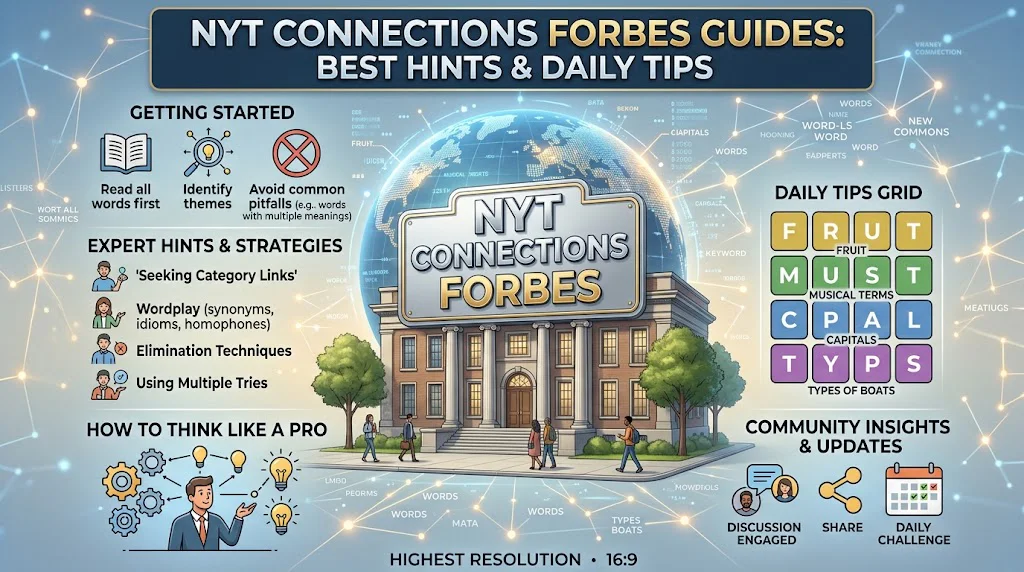
Have you ever looked at a grid of sixteen random words and felt completely stuck? NYT Connections Forbes You are not alone in this fun daily struggle. Millions of players open up their phones each morning to play a popular word-grouping puzzle. Finding the hidden threads between words brings a huge wave of joy. People love testing their brains and learning new vocabulary every single day. If you want to get better at solving these grids, you need a solid plan. Learning how clues work can turn a frustrating game into a fun win.
Why People Search for nyt connections forbes Guides
Many players look for helpful articles on major websites when a puzzle gets too hard. Finding articles like nyt connections forbes helps players discover daily hints without spoiling the entire game. Major publications often share clever clues that point you in the right direction. Instead of giving away all the answers, these guides offer gentle nudges. This approach lets you keep the fun alive while getting past tricky roadblocks. Using trusted online resources is a smart way to sharpen your puzzle-solving skills.
Understanding the Basics of the Connections Grid
The game starts with a clean slate of sixteen words sitting on your screen. Your main goal is to sort these words into four distinct groups of four. Each group shares a secret connection that ties the terms together. These links might be synonyms, parts of a common phrase, or related trivia facts. You only get four chances to make mistakes before the game ends in a loss. Taking your time to study all sixteen words before tapping is always a great idea.
The Secret Meaning Behind the Four Color Levels
Every group you solve comes with a specific color to show its difficulty level. Yellow is usually the easiest group to spot on the board. Green and blue groups bring a medium level of challenge that requires careful thought. Purple is widely known as the trickiest and most frustrating category of all. Knowing these color tiers helps you figure out which words to tackle first. Most players try to clear out the yellow and green groups before dealing with purple.
How to Spot Hidden Traps and Red Herrings
The puzzle creators love to use tricky words that seem to fit multiple categories. These clever traps are called red herrings designed to throw you off track. You might see five or six words that look like they belong in one single family. However, only four truly belong together once you solve the rest of the board. If you keep failing with a specific set of words, step back. Try looking for a completely different meaning or a fresh angle for those terms.
The Value of Checking Hints Before Full Answers
Rushing straight to the final answers can take away the joy of playing. Using clues and hints gives your brain a chance to do the heavy lifting. When you read a small hint, it often sparks an “aha!” moment in your mind. This makes solving the puzzle feel much more rewarding in the end. Many guide sites provide tiered help so you can choose how much assistance you need. Always try a minor hint before looking at the complete word solutions.
Building Your Daily Puzzle Solving Habit
Consistency is a massive key if you want to become a master player. Setting aside five minutes each morning can train your brain to spot patterns faster. Playing alongside a friend or family member also adds an extra layer of fun. You can compare notes and laugh about the tricky traps you fell into. Over time, your vocabulary will grow, and solving the grid will feel much easier. Enjoy the process of learning and celebrating your daily puzzle victories.
Essential Tips From Experienced Word Game Fans
Veteran players always recommend looking for obvious pairs or triplets first. Writing down potential groups on a separate piece of paper can also clear your head. Never rush your four guesses, because wasting them on careless mistakes hurts your chances. Pay close attention to grammar, prefixes, and suffixes hidden inside the words. Simple habits like these build a strong foundation for winning streaks. Keep practicing every day, and your puzzle skills will improve naturally.
Complete Detailing Table of Puzzle Features
| Feature Name | Difficulty Level | Primary Purpose | Best Strategy |
| Yellow Group | Easy | Quick confidence booster | Solve this category first to reduce board clutter. |
| Green Group | Medium | Tests standard vocabulary | Look for common synonyms or straightforward phrases. |
| Blue Group | Medium-Hard | Introduces niche trivia | Brush up on general facts and pop culture knowledge. |
| Purple Group | Hardest | Ultimate brain teaser | Leave these remaining words for last by default elimination. |
Frequently Asked Questions
What is the main goal of the daily word grouping game?
The main goal is to sort sixteen mixed words into four separate groups of four based on hidden shared themes.
Why do players look for puzzle guides online?
Players check online guides and hints when they feel stuck and need a small nudge without spoiling the full solution.
How many mistakes are allowed before losing the game?
The game allows you to make up to four mistakes before your puzzle ends.
What do the different colors mean on the grid?
Colors represent the difficulty of each group, ranging from easy yellow up to very tricky purple.
Are these daily word games free to play?
Yes, you can play these engaging puzzles for free directly through major newspaper websites and apps.
How can I get better at spotting tricky word patterns?
Playing every day, expanding your general trivia knowledge, and studying past solutions will help you recognize patterns much faster.
Conclusion
Mastering daily word puzzles takes a mix of patience, practice, and smart hint usage. By understanding how categories work and using resources like nyt connections forbes wisely, you can boost your daily win rate. Jump into today’s grid, test your brain, and enjoy the satisfaction of clearing every single color group!